How to tell if a fur coat is real
Distinguishing an authentic fur coat from a high-quality imitation is not always obvious. Premium faux furs in recent years have improved enough to fool the eye at first glance. However, there are seven concrete tests that anyone can do in less than five minutes to verify if a garment is made of natural fur and, moreover, if that fur is of the quality the price promises.
How to recognize an authentic fur coat
Beyond its monetary value, knowing whether a garment is natural or synthetic influences how you care for it, how you clean it, how long it will last, and what value it will retain. Knowing how to identify an authentic fur coat is especially useful in two critical scenarios:
- Vintage market purchase without clear certification
- Family heirloom without legible labels
If you buy from a professional furrier with an invoice and label, this guide serves more as general knowledge; if you buy on peer-to-peer platforms, it is essential to avoid paying for natural fur when you are actually getting an imitation.
Test 1: separate the fur and observe the base
The simplest and most reliable test. Separate the fur with your fingers until you see the base. If you see soft and flexible leather, slightly fibrous, it is natural fur. If you see a woven textile mesh (similar to a crochet stitch or felt), it is synthetic.
This test almost never fails. High-end faux furs try to hide the base with special treatments, but when you separate the fur, the woven textile structure that gives away the synthetic always appears.
Test 2: the individual hair test
Take a loose hair from the garment (there is always one on the lapel or cuff) and observe it between your fingers. Natural hair tapers toward the tip, is elastic, and has color nuances along its length. Synthetic hair has the same thickness from root to tip and a uniform color.
If you have a lighter at hand and the garment is not yours or is already damaged, you can do the fire test: natural hair singes like human hair (smell of burnt keratin); synthetic hair melts and contracts into a hard little ball (smell of plastic).
Test 3: the "blow"
Blow gently on the garment in different areas. Natural hair opens up and returns to its position thanks to its elasticity. Synthetic hair stays partially fallen before recovering, or moves as a block, like a lock of hair.
Test 4: the texture when running your hand over it
Run your hand in the direction of the fur. Natural fur feels like a caress, with elasticity. Run your hand in the opposite direction: natural fur offers a soft, almost alive resistance. Synthetic fur feels stiff and stays "combed" when you run your hand against it.
Test 5: weight, drape, and temperature
A natural fur coat is warm to the touch even before you put it on: the natural fiber retains heat. A synthetic one feels cool, like any fabric.
The drape is also different: the natural garment "settles" on the shoulders with a certain weight and fluidity, while the synthetic one usually has a stiffer and flatter behavior. This is especially noticeable in vests and short jackets.
Test 6: check the seams and construction
Here we move on to distinguishing quality within authentic furwear. A well-made natural fur coat has:
- Fine, even, almost invisible seams on the inside
- Lining of silk, cupro, or high-quality satin, never shiny polyester
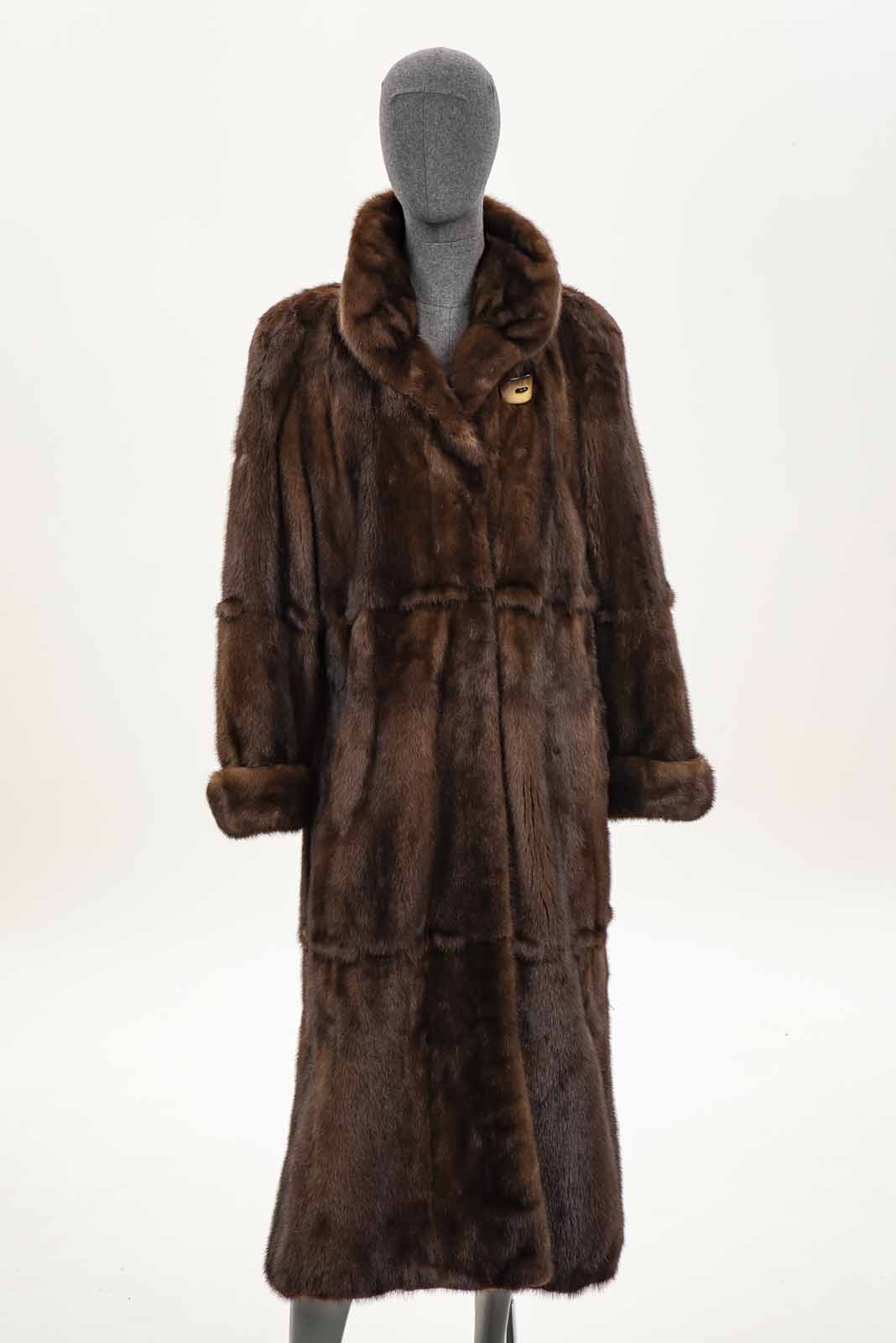
- Lined buttons or natural material buttons (horn, jewelry, leather)
- Label with clear composition indicating species, origin, and atelier
If the lining is machine-sewn with large and uneven stitches, or the button looks like basic plastic, it is probably authentic fur but of low manufacturing quality, or a piece that has been heavily repaired over the years.
Test 7: the behavior of the fur when brushed
Run a soft brush or your fingers over it as if you were combing the garment. Natural fur naturally regains its volume and direction, while synthetic fur tends to clump, generate static electricity, or stay flattened. This detail, combined with the previous tests, helps confirm the diagnosis when any single test leaves doubts.
Conclusion: confirming an authentic fur coat step by step
No single test is one hundred percent infallible, but the combination of several leaves very little room for error. Always start by separating the fur and observing the base, continue with the individual hair, and finish by checking the construction and labels. If all the signs point in the same direction, you can be reasonably sure that you have an authentic fur coat in your hands and, moreover, get a reliable idea of its quality. In case of any doubt with a valuable piece, the most prudent thing is to consult a professional furrier, who will confirm the species and condition of the fur with absolute certainty.