Differences between whole piece, letout, and remnant: sewing techniques explained
Two mink coats of the same color, the same weight, and from the same supplier can cost €1,500 and €5,000, respectively. The difference is not in the fur, but in the construction technique. The way a furrier cuts, assembles, and sews the pelts determines half the value of a garment. This guide explains the three main construction techniques (full pelt, letout, and patchwork), how to recognize them in a garment, and when each is the right choice.
What are fur construction techniques?
When we talk about construction techniques, we are referring to the method by which the furrier treats each pelt before assembling the garment: whether they keep it whole, divide it into strips to stretch it, or reuse small fragments. Each of these construction techniques completely changes the yield of the pelt, the workshop hours, the drape of the fur, and the final durability. Knowing how to distinguish them is what allows you to understand why two seemingly identical garments have such different prices.
Why construction technique determines the price so much
Mink pelts arrive at the workshop as individual pelts (one per animal). A medium-length coat requires between 30 and 80 pelts, depending on the size of the model and the technique used. What the furrier does with those pelts determines:
- How much pelt is utilized (letout utilizes 60% of each pelt; patchwork utilizes 95%)
- How many hours the construction takes (from 30 hours for patchwork to 200 hours for letout)
- The final visual drape (how the fur falls, how the garment looks in motion)
- The durability (how many years a well-made garment will last)
Technique 1: Full pelt (skin-on-skin)
The most traditional construction technique. Each pelt is kept whole or nearly whole, and they are sewn together to form the garment.
How it looks
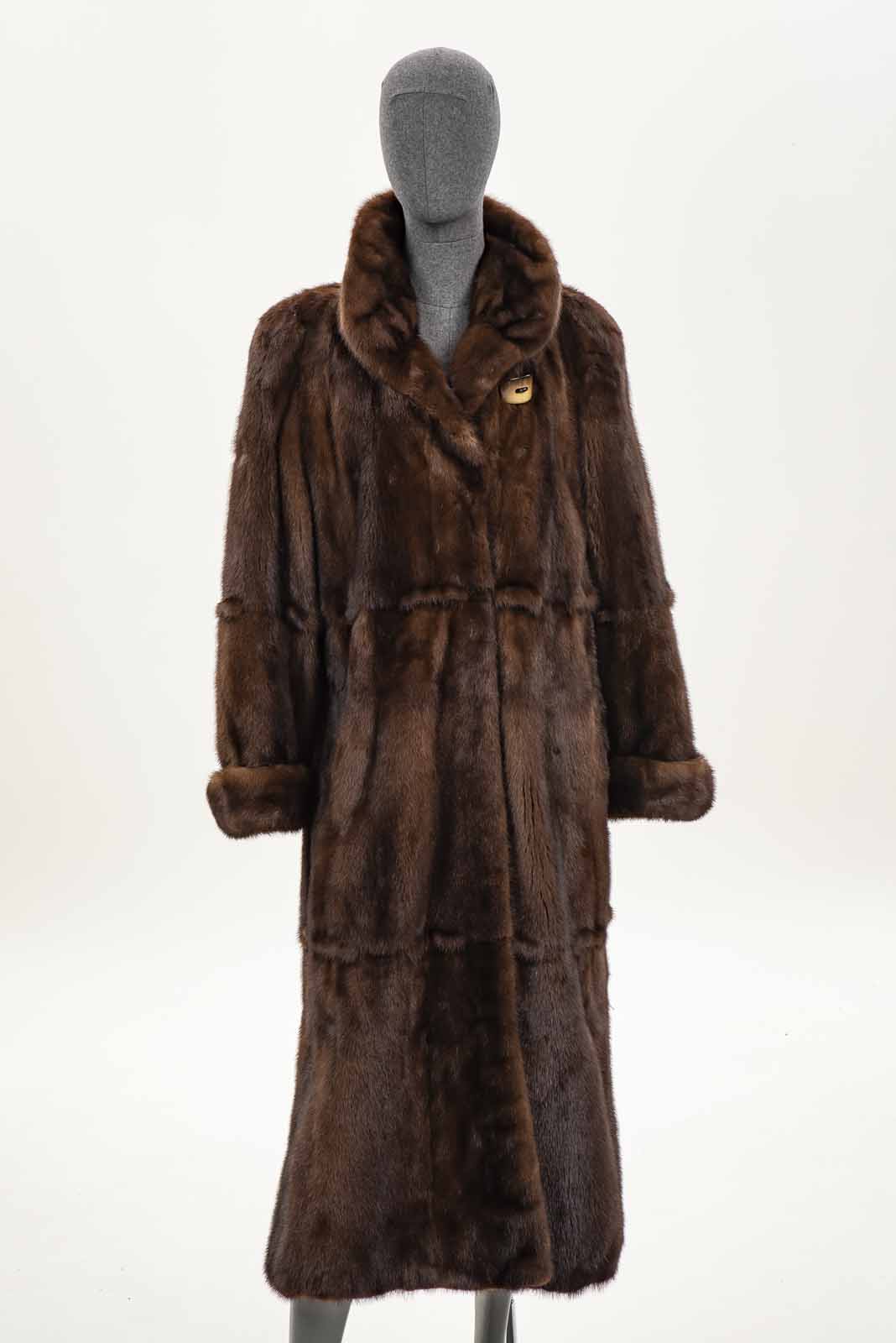
In a full-pelt garment, you can clearly distinguish the individual pelts: there are visible lines where one pelt ends and another begins. The fur falls uniformly on each pelt but with rhythmic interruptions along the garment. The effect is structured, almost geometric.
Main variants
- Horizontal: the pelts are arranged side by side in horizontal lines. It visually widens the wearer. This was the classic arrangement for mink coats in the 80s.
- Vertical: the pelts are arranged lengthwise. It slims the figure and provides an elegant drape. This is the preferred arrangement for contemporary garments.
- Herringbone (V-shaped): the pelts are arranged at an angle, creating a herringbone pattern. It adds visual dynamism.
When it is the right technique
Full pelt is the choice for pieces intended to be kept for 30+ years: the pelt-to-pelt join is the strongest, and the garment maintains its structure without deforming. It is the technique used for classic mink coats that are passed down through generations.
Estimated price
For full-pelt mink, a new coat ranges from €4,000 (small sizes, medium-quality pelts) to €15,000 (long lengths, premium pelts, renowned ateliers).
Technique 2: Letout (or stretched)
The most sophisticated and expensive construction technique. Each pelt is cut into very thin diagonal strips (3–5 mm wide), and those strips are sewn back together offset from one another, creating a much longer and narrower "stretched" pelt.
How it looks
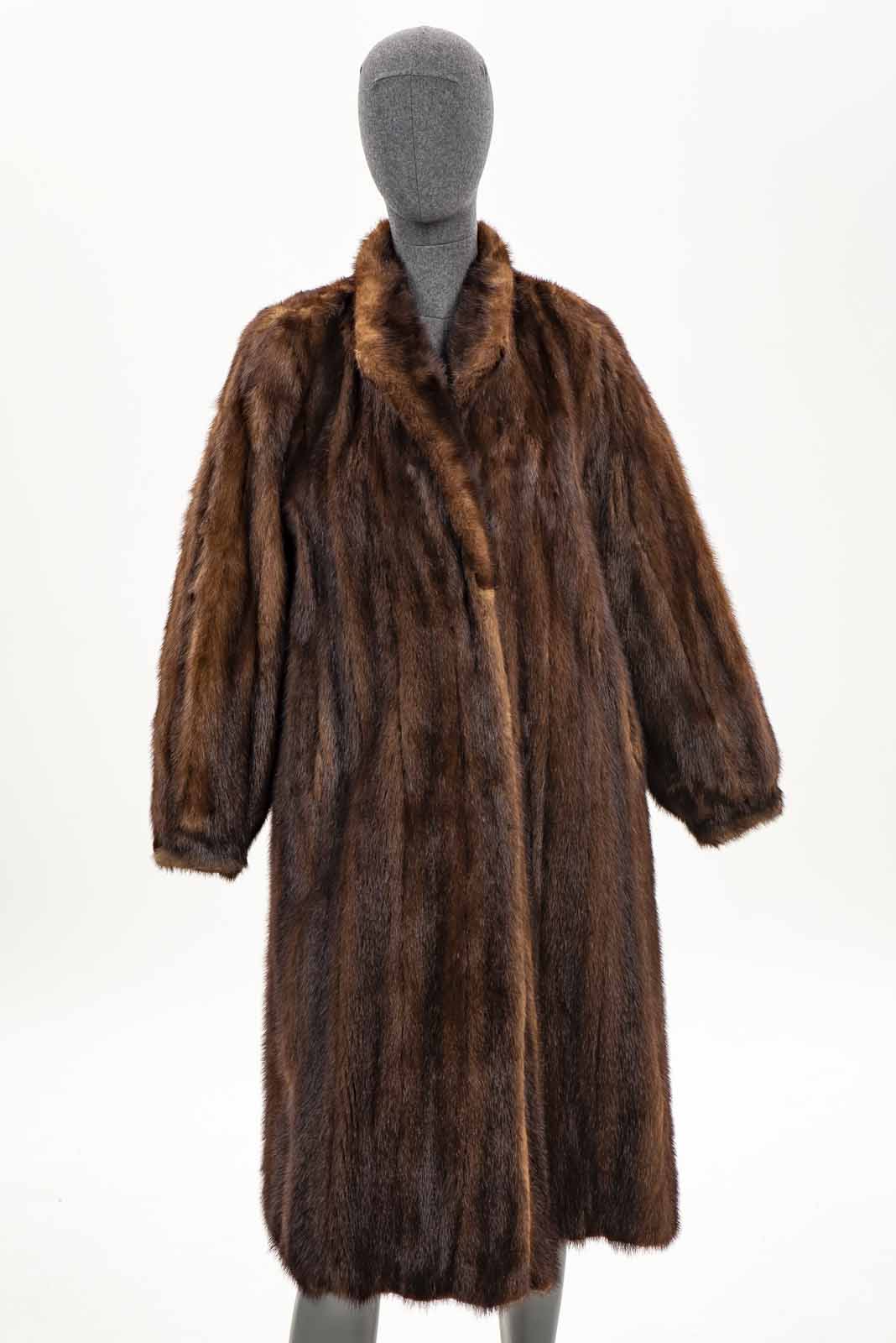
In a letout garment, you cannot distinguish the individual pelts: the fur falls in continuous vertical lines along the entire garment, without interruptions. The effect is a fluid, almost liquid drape. The garment appears longer and slimmer than it actually is.
Why it is so expensive
A single mink pelt may require 200–300 fine cuts to be prepared using letout. Multiply that by the 60–80 pelts in a coat. A fully letout garment requires between 150 and 250 hours of manual work by an expert furrier, compared to the 30–50 hours required for a full-pelt garment of the same size.
When it is the right technique
Letout is ideal for women seeking visual slimming: pieces that slim the silhouette, elongate the body, and provide an elegant drape. It is especially recommended for inverted triangular silhouettes (it slims the shoulders) and for shorter women (it visually elongates).
Estimated price
Fully letout mink: €6,000 to €20,000. The difference compared to full pelt is almost entirely explained by the workshop hours: it is the construction technique that requires the most labor and, therefore, makes the final garment the most expensive.
Technique 3: Patchwork
The construction technique aimed at maximizing pelt yield. Instead of working with whole pelts, patchwork gathers and assembles smaller fragments to form the fabric of the garment, utilizing up to 95% of each pelt.
How it looks
In a patchwork garment, the pattern is more irregular: the fur does not follow continuous lines like letout or distinct blocks like full pelt, but rather a composition of fragments. When well executed, it results in a lightweight and versatile garment; when executed without care, the seams are more noticeable.
When it is the right technique
Patchwork is the option for more affordable, lightweight, or everyday garments, where material yield and a lower number of construction hours are prioritized (around 30 hours compared to the 200 required for letout). It is a good entry point into fur without giving up genuine fur.
How to choose between the three construction techniques
No technique is better than another in absolute terms: there is a right technique for every goal. If you are looking for a piece to pass down and maximum durability, full pelt is your construction technique. If you prioritize slimming and a fluid drape, letout. If you are looking for lightness and a more affordable entry point, patchwork. Learning to recognize these construction techniques in a garment allows you to know exactly what you are paying for and why.