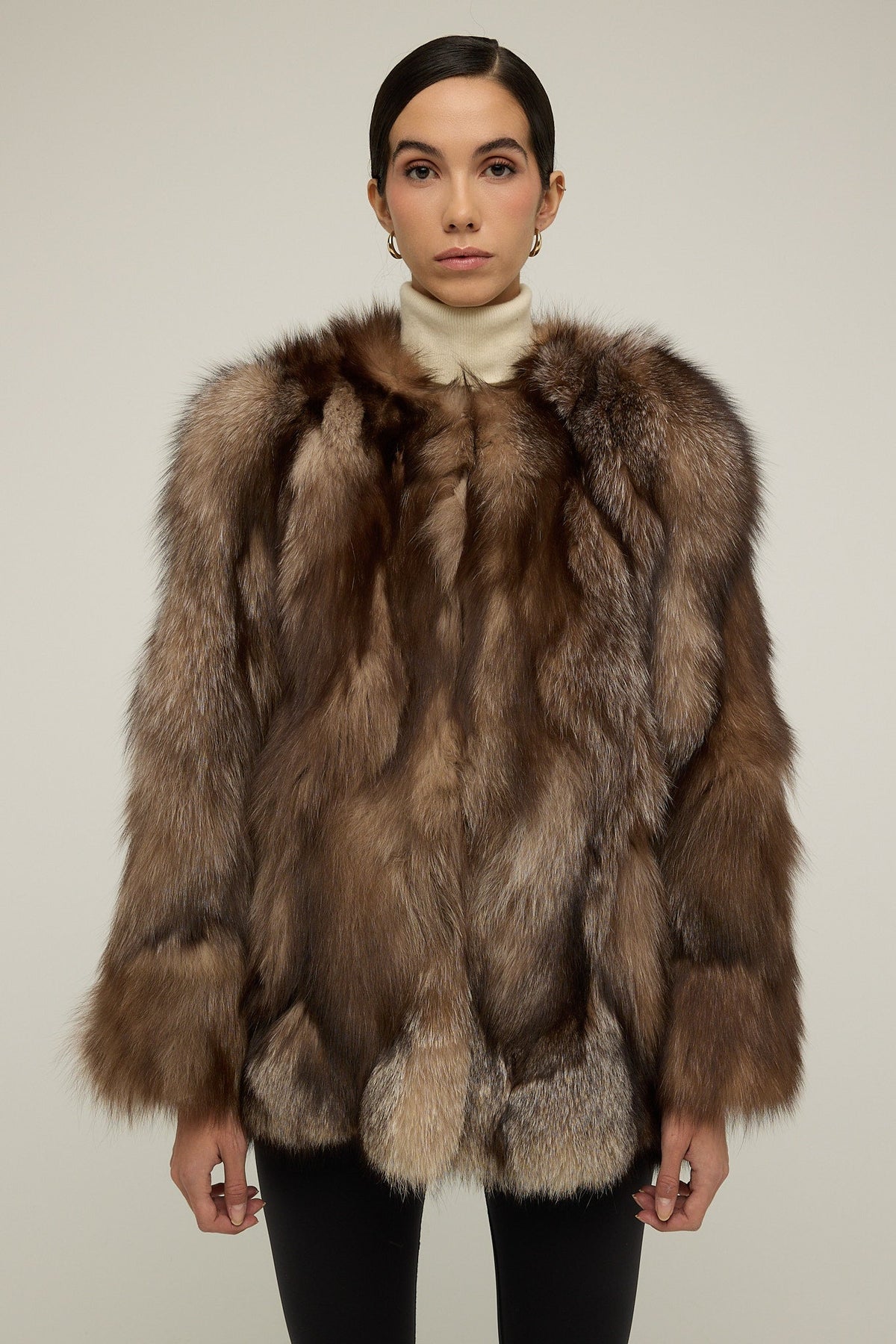
The 10 Costliest Mistakes When Buying Your First Fur Coat
Buying your first fur coat is a decision that will likely last you between 15 and 30 years. Mistakes on that first purchase are the most expensive, because the garment is rarely worn, poorly stored, or sold at a loss after just a few years. We share the 10 most common mistakes we see in customers who come to Nomadi after a bad previous purchase, and how to avoid them so that your investment is right from the start.
Mistake 1: Buying cheap thinking "it's just a trial run"
The reasoning seems logical: "since it's my first coat, I'll buy an affordable one to see if I like it". The problem is that a cheap fur coat (under €400-500) usually has such poor fur and leather quality that it ages badly after two or three seasons. And because the garment ages badly, you will end up concluding that "fur isn't for me" when what you bought never was.
The correct alternative: if your initial budget is limited, look at vintage. For €500-800 you can get professionally inspected quality pieces on platforms like Nomadi Vintage. Real quality, reasonable price.
Mistake 2: Choosing the wrong style for your lifestyle
Women who work in an office, live in a mild climate, and rarely go out at night buy long mink coats. Result: the piece comes out of the closet three times a year. Very active and urban women buy long pieces when what they need is a short jacket.
Before buying, ask yourself a practical question: How many times a month will I be able to wear this garment? If the answer is less than four during the cold months, the style is wrong.
Mistake 3: Not checking the inside of the garment
The leather (the inner part, the back of the fur) is where you can see if the garment is well made. It should be soft, flexible, and free of cracks. If they don't let you see it, be suspicious. If you see it and it is stiff, cracked, or uneven, don't buy it. Cracks in the leather are irreversible, and the garment will break after a few seasons. This detail is worth more than any sales pitch.
Mistake 4: Confusing "genuine leather" with "quality leather"
That a garment is verified natural leather does not mean it is of good quality. There are excellent minks and mediocre minks; premium foxes and foxes without density. Always ask for the specific origin (NAFA, Saga Furs, China without certification), the construction technique (whole piece, letout, remnant), and, if the garment warrants it, the Furmark certification. Authenticity is the minimum, not the ceiling.
Mistake 5: Paying without an invoice or technical sheet
A professional fur purchase is always accompanied by an invoice with the exact composition (species, origin, technique) and, frequently, a certificate of origin. If they sell you a €1,500 coat without documentation, it is not professional fur. Without documentation, you also lose resale value: no one will buy a vintage piece without a history.
Mistake 6: Buying custom without first trying the standard size
Many women ask for "custom tailoring" on their first purchase. The problem: if you have never worn a fur coat, you don't know what width fits you well with a thick sweater underneath, or how much fur you prefer on your shoulders. Excessive custom tailoring makes the garment unsellable (another customer will not fit into your specific size). First buy the closest standard size; if you need minimal adjustments, make them after a season of real use.
Mistake 7: Letting yourself be carried away by seasonal fashion
The bubblegum pink mink of 2022, the extremely short bolero-style coats of the 2000s, the furs with punk effects and studs. All extreme fur fashions age badly. Your first fur coat has to be timeless: neutral tones, classic cuts, and balanced volumes that will still work in ten years. Flashy things tire quickly; timeless things last for decades.
Mistake 8: Forgetting about garment care
A fur coat needs basic care: hang it on a wide hanger, let it breathe, avoid closed plastic, and keep it away from heat and moisture sources. Storing the garment tightly in a hot closet dries out the leather and mats the fur. If the purchase does not consider how and where you are going to store it, you are shortening its useful life before you even wear it for the first time.
Mistake 9: Buying without trying on or getting advice
Buying blindly, without trying on the garment and without anyone to guide you on style, size, and drape, is one of the most expensive mistakes. Make sure you can see and touch the piece, have real advice, and know the exchange policy. Good guidance on the first purchase avoids most later regrets.
Mistake 10: Not seeing it as a long-term investment
Whoever buys thinking only about today's price forgets that a quality piece retains part of its value and can be resold with history and documentation. Treating your first fur coat as an investment —not as a seasonal whim— completely changes the purchasing criteria: you prioritize quality, timelessness, and preservation.
How to get your first fur coat right
Avoiding these ten mistakes boils down to one idea: your first fur coat is a long-term decision, not an impulsive purchase. Prioritize the quality of the leather and the fur, choose a style that fits your real life, demand documentation, and take care of preservation from day one. If you follow these criteria, your first fur coat will stop being a risky expense and become an investment that will accompany you for decades. At Nomadi, we guide every first purchase so that you get it right from the start.