Warmer furs for extreme winters: thermal comparison
Not all furs provide the same level of warmth. If you live in an area with long winters, travel frequently to cold destinations, or are simply looking for the garment that will best protect you from extreme cold, choosing the warmest fur is no longer just an aesthetic detail—it becomes a practical decision. This guide compares the warmest furs used in fur fashion from a technical perspective: how warm they really are, what temperatures they can withstand, and when to choose each one.
Why natural fur is warmer than any synthetic material
Before comparing species, it is useful to understand why natural fur remains unsurpassed in cold climates. The reason is structural. Natural fur has two layers that create a static air cushion: the dense, fine underfur traps air in millions of tiny chambers, while the longer, stiffer guard hairs protect against wind and external moisture. This air cushion is the best thermal insulator found in nature.
Synthetic fabrics (polyester, acrylic, nylon) mimic part of this structure, but their thermal efficiency drops starting at -10°C. A technical 800 fill power down jacket provides warmth, but not like a lightweight mink coat at temperatures of -15°C. The International Fur Federation regularly publishes thermal comparisons in which fur consistently tops the rankings for efficiency relative to the garment's weight.
The five warmest furs: technical ranking
These are the warmest furs on the market, ranked by insulation capacity and designed for different levels of cold.
1. Wolf and coyote: maximum thermal protection
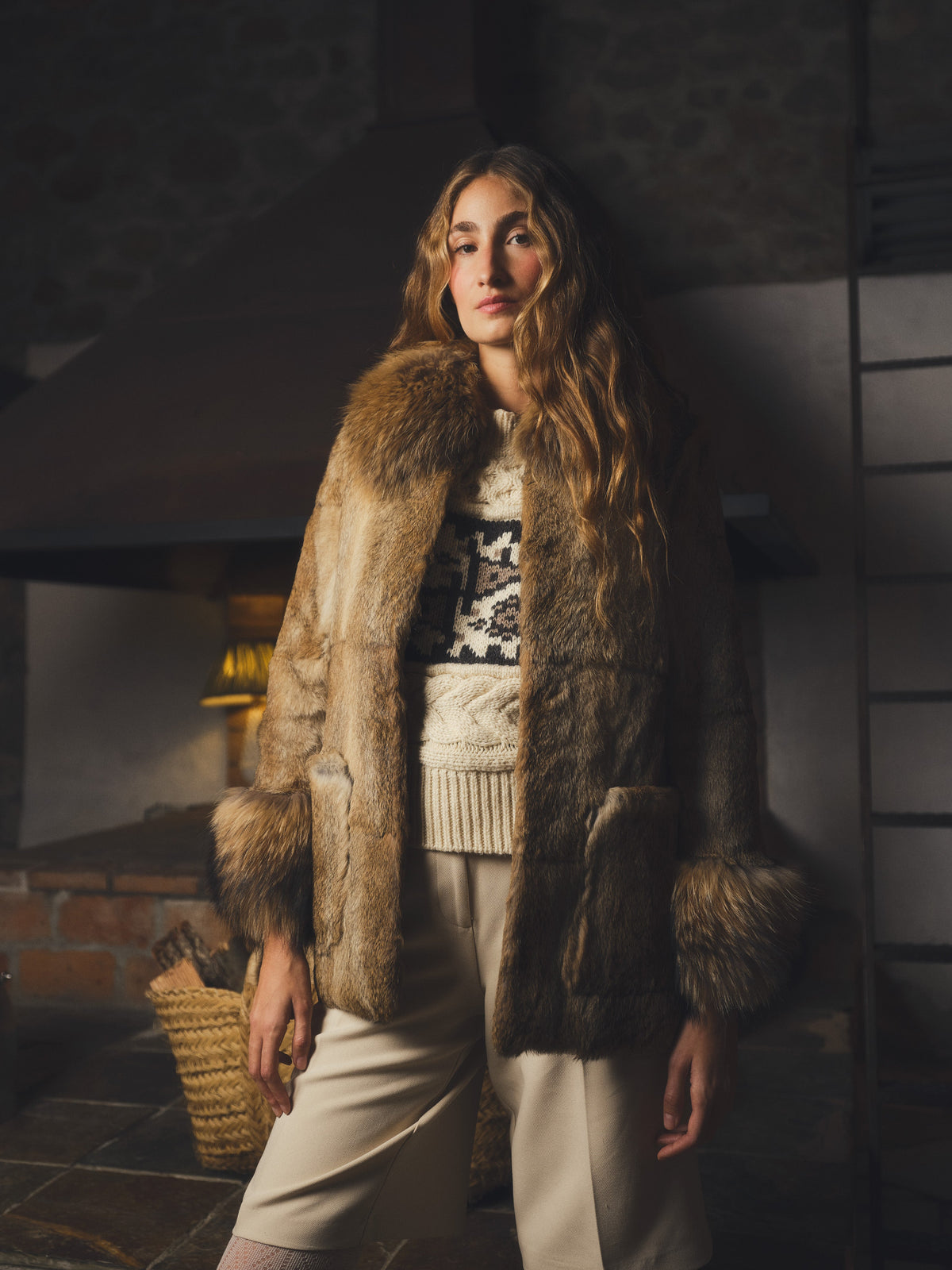
Wolf and coyote are the warmest furs available in fur fashion. Their very long guard hairs (8–15 cm) and extremely dense underfur can withstand temperatures down to -40°C. This is why Inuit and other Arctic populations have traditionally used these furs.
Today, they are used primarily for the hoods of technical parkas rather than for full coats: the fur is so dense that it would be excessive for everyday wear in Europe. If you are traveling to Arctic regions, a coyote hood is an essential investment.
2. Mink: the perfect balance of warmth and weight
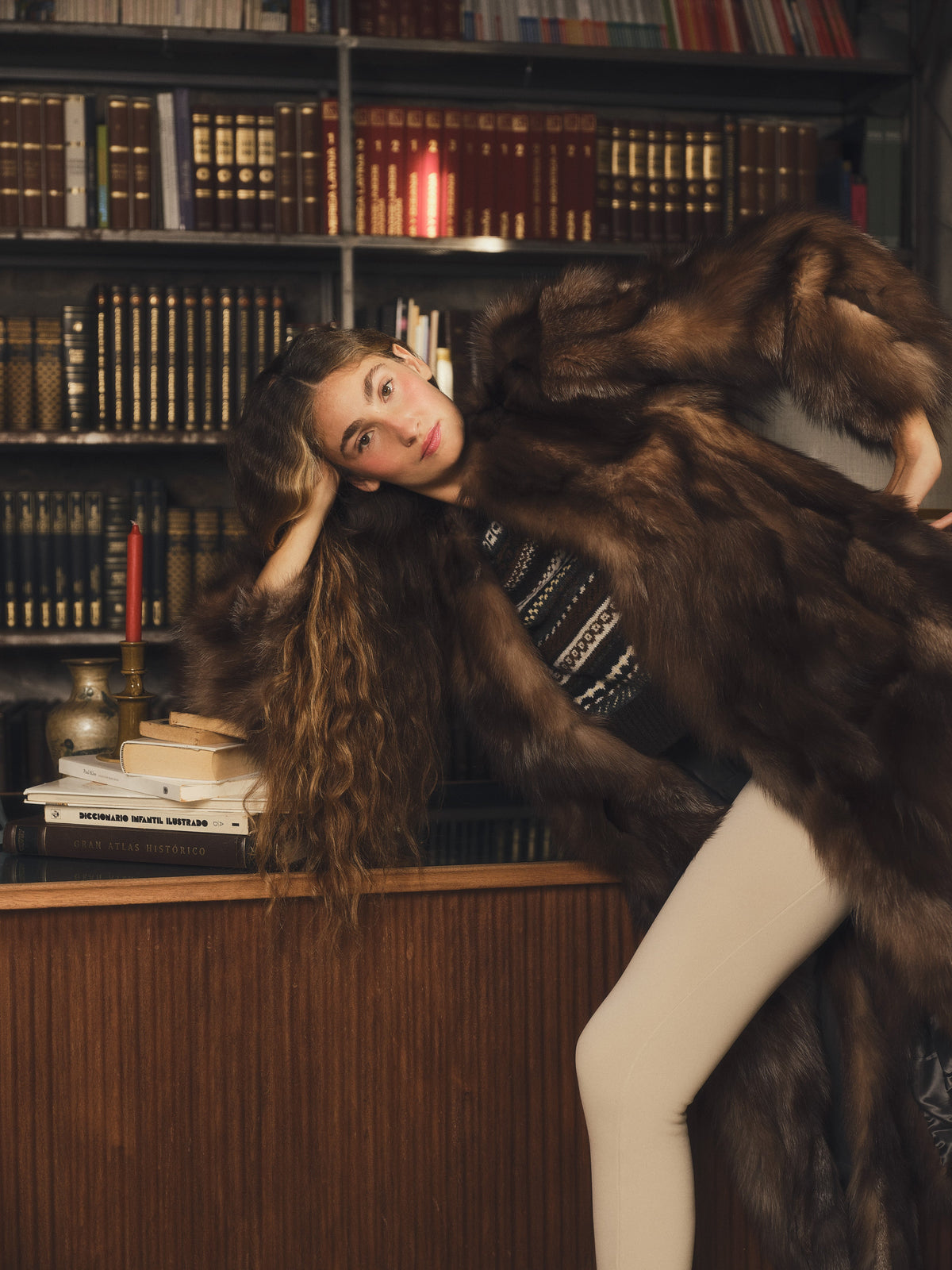
Mink offers the best ratio of warmth to lightness. Its creamy underfur is one of the densest in the animal kingdom, which explains why a lightweight mink coat (weighing less than 2 kg) is warmer than a 1.5 kg technical down jacket.
Estimated thermal resistance: comfortable down to -20°C and capable of withstanding temperatures down to -25°C in a long coat. It is the ideal fur for long European winters (Madrid, Paris, Berlin, northern Italy). Models such as NDVINT 14 or NDVINT 15 offer this thermal performance in a versatile format.
3. Fox: equal presence and warmth
Fox offers more visual volume than mink but slightly less warmth per gram. Its long guard hairs (5–12 cm) create a large air chamber, though it is less dense than mink's. Estimated thermal resistance: comfortable down to -15°C and capable of withstanding temperatures down to -20°C in a long coat.
It is the balanced choice for women looking to combine warmth with visual presence. If you live in an area with moderate winters (the Mediterranean, southern France) and want a piece that provides excellent warmth on the coldest days, fox is a very sensible option.
4. Beaver and otter: the warmth of aquatic furs
The furs of semi-aquatic animals (beaver, otter) have a unique feature: they are naturally waterproof. The underfur is so dense and oily that it repels water. This makes them ideal for climates that are both cold and damp.
Thermal resistance: similar to fox, comfortable down to -15°C, but with the added advantage of handling snow and light rain better than any other fur. Today, they are less common in fashion furwear but are still widely represented in vintage furs from the 1960s–80s.
5. Lambskin and astrakhan: lightweight warmth and flexible insulation
Lambskin and astrakhan round out the ranking of the warmest furs thanks to their excellent lightweight insulation. Their tight curls trap air very efficiently, providing warmth without adding much weight or volume to the garment. They are a versatile option for those seeking warmth in everyday urban life without the density of Arctic furs.
They are particularly practical for moderate winters with occasional cold days and work well in full coats as well as in details, collars, and inner linings. If you prioritize lightness and comfort without sacrificing warmth, this family is a sensible alternative.
How to choose the warmest fur for your climate
There is no single answer: the best of the warmest furs is the one that suits your actual climate and how you plan to use it. For Arctic cold or travel to extreme destinations, wolf and coyote hoods are unsurpassed. For long European winters, mink offers the best balance of warmth, weight, and elegance. For moderate winters where visual presence is important, fox is the balanced choice; and if you need moisture resistance, beaver and otter make the difference. Lambskin and astrakhan complete the range for those seeking lightness.
First, determine the minimum temperature you will be exposed to and how you plan to use the garment; from there, choosing among the warmest furs becomes a simple, long-lasting decision. If you are unsure which model suits your climate, our team can guide you to get it right the first time.